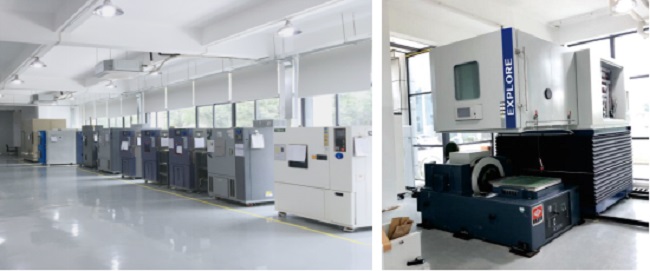
Reliability testing is an activity to evaluate the functional reliability of a product in all environments such as expected use, transportation or storage during the specified service life. It refers to exposing the product to natural or artificial environmental conditions and experiencing its effects, so as to evaluate the performance of the product under the environmental conditions of actual use, transportation and storage, and analyze and study the influence degree and action mechanism of environmental factors.
Purpose of reliability test
By using various environmental test equipment to simulate the high temperature, low temperature, high temperature, high humidity and temperature change in the climate environment, accelerate the reaction of the products conditions in the use environment to verify whether it meets the expected quality objectives in research, development, design and manufacturing, so as to evaluate the overall product to determine the products reliability life.
Necessity of reliability test
Identify product defects through reliability test; Confirm product processing and manufacturing process defects; Put forward improvement opinions and suggestions to help the enterprise improve the process level and improve the product life and quality; Provide technical support for the R&D and production of enterprises, so as to create high-quality products and improve the market competitiveness of enterprises.
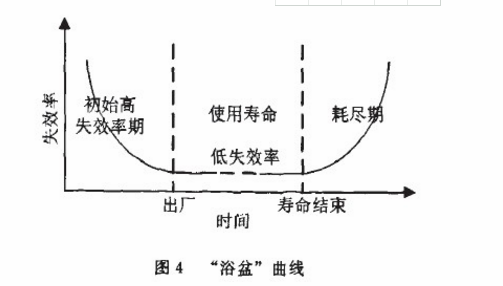
"Bathtub curve" is also called "life characteristic curve"
"Bathtub curve" is used to describe the failure characteristics of mechanical parts within the service life, or the life characteristics of parts. The "bathtub curve" of different parts has different properties.
Reliability items are divided into three categories: electrical performance test, environmental reliability of parts and components, and mechanical reliability of parts and components.


 Current location:Home>Test Project>Reliability Testing
Back
Current location:Home>Test Project>Reliability Testing
Back